For hospital, clinic and healthcare staffing teams in India
Fill the ICU night roster without reading180 identical staff nurse CVs
It's 6:40am, the nursing superintendent has messaged that ICU nights are short by two from the first, and Saturday's drive folder still has 180 CVs in it. RecruitKar scores every one against the req you actually wrote and hands back a ranked calling list instead of a folder.

What one open nursing seat actually costs you
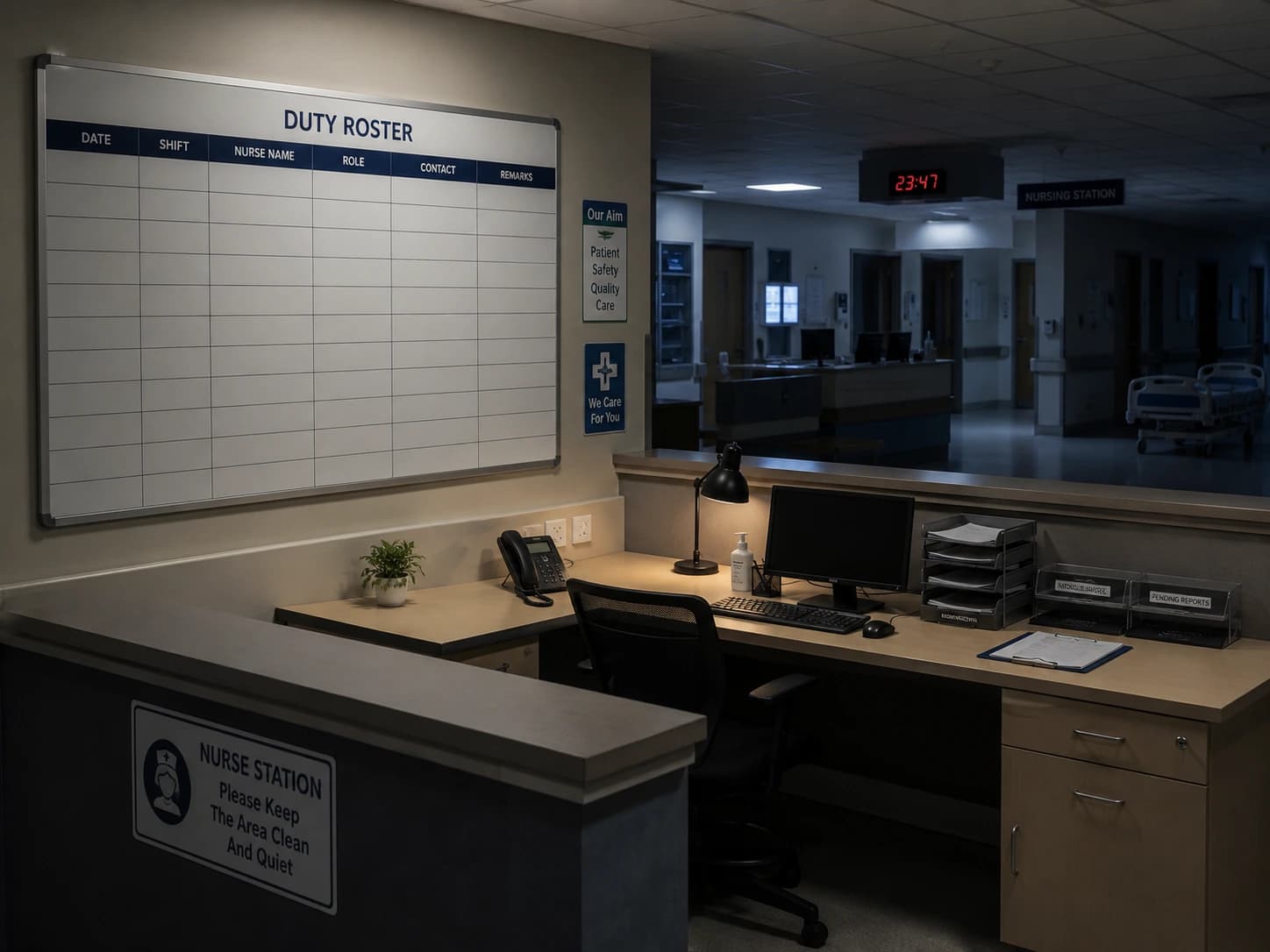
The same week, twice
One ICU staff nurse req, two versions of the same week


You open them one at a time, rename the files, type names and numbers into a register. Three of them are the same nurse, who applied online twice and then walked in. Two hours gone before you have read a line.
Upload the folder at 0.5 credit a resume, and tick the applicants on the Naukri, Indeed or Shine tab at the same half credit. She arrives once, as one card, however many ways she reached you.
Everybody wrote ICU exposure, so you go by the degree line and by which hospital name you know. The council registration number, if it is on the CV at all, is somewhere on page two.
Every profile carries a score against your req and a verdict from strong fit to not fit. If the req asked for BSc, state council registration and two years on ventilators, whatever the profile does not evidence is on the missing list by name, next to the red flags and the questions to ask her.
You call at 11, she is in the OT. You call at 4, she is asleep after nights. Sixty numbers, six attempts each, and the same four questions typed into WhatsApp sixty times.
WhatsApp templates with a 24-hour session so she can reply at 2am when she comes off duty, bulk email with merge fields, or an AI voice call, all off the same ranked list. Email is 1 credit per candidate ever, not per message.
The same six questions on every call: expected in-hand, notice period and relieving, rotational nights, hostel, is the registration in hand, when can you join.
An AI voice or video interview in one of 11 or more languages, recorded, with proctoring events, a scorecard and a hiring recommendation sitting on the card when you open it. The matron's round gets scheduled after that, through Google Calendar or Outlook, on Meet, Teams, Zoom or in-office.
Five CVs forwarded on WhatsApp at 11pm, then a week of asking whether anyone opened them.
A teammate reviews internally first, if you want that gate. Then it goes out with only the fields you chose to show, and the approve, reject or note comes straight back onto the candidate.
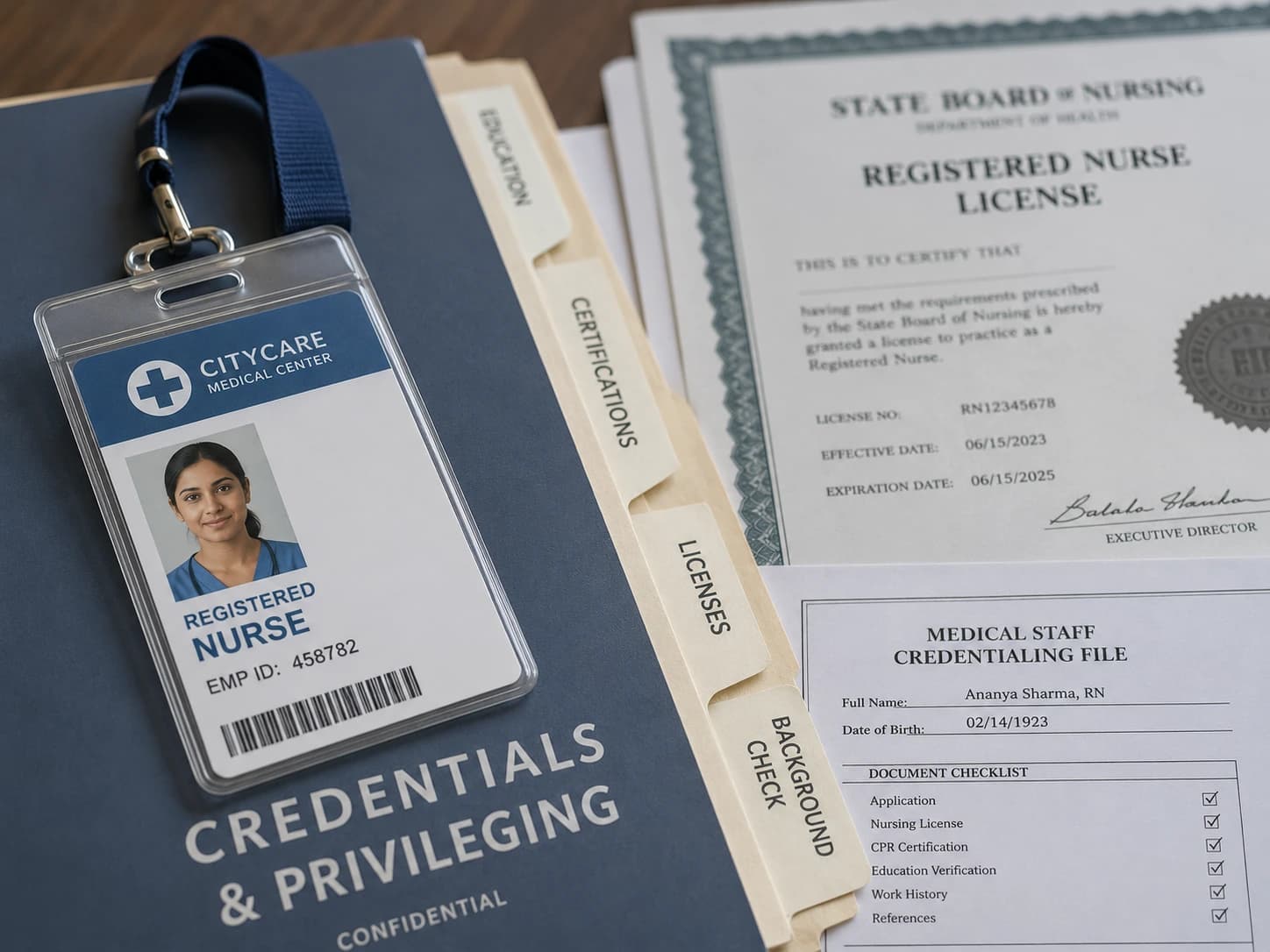
The part only hospital and clinic recruiters deal with
Licence, shift and clinical checks before you call
Three questions have to be answered before a nurse is even callable, and none of them are about skills. Is the qualification the one the unit asked for, because BSc, GNM and ANM are not interchangeable when the req says BSc. Is the state council registration in hand, still applied for, or absent from the CV altogether. Will she do rotational nights, because a day-only nurse cannot hold a night roster however good she is on a ward. On most desks a CV that overstates costs you a panel hour; here a candidate who reaches the matron's round without a registration number costs you the seat for another month, and the ward covers it with doubles. RecruitKar reads each profile against the req you wrote and tells you which of the three is missing before you pick up the phone.
Missing is named, not assumed
Put BSc Nursing, state nursing council registration and two years of ICU into the req and the profile comes back with matched and missing listed separately, one by one. Ventilator handling missing. Registration not evidenced. Those do not get averaged away into a friendly overall number. The honest part: it reads what is on the profile. It does not query any council register, and it should not pretend to.
The call is about her posting, not about nursing
Each candidate carries suggested interview questions written for that person: which unit she was actually posted to, what she handled there, what the eleven-month gap was. That is a two-minute call instead of the same six questions you ask everybody. And if sixty calls is not happening this week, the AI voice or video interview runs in 11 or more languages, records, and comes back with a scorecard and a recommendation, so shift, notice and registration are already answered before a unit head gives up a slot.
“Staff nurse, 10 posts, urgent” is not a JD
That is what lands on your WhatsApp from the unit at 9pm, and pasting it in will not produce a confident score. Those dimensions come back empty instead of flattering. Write the unit, the shift pattern, the qualification, the registration requirement and the exposure you need into the req, and there is finally something to check each profile against. The flip side is honest: vague req in, vague verdicts out, and it will show you that rather than hide it.
In practice
How it works, on a normal roster week
Write the req the way the unit head would say it out loud
Add the hospital or client, then the department, ICU, OT, radiology, front office, then the job. Each client sits in its own space, which matters when one desk staffs three hospitals. Then put in what the unit actually needs: BSc or GNM, council registration, two years on ventilators, rotational nights, hostel or no hostel. Everything after this is scored against that.
Bring in the people you already have
Tick your Naukri, Indeed and Shine applicants with the browser extension. Upload the folder from Saturday's drive. Drop the nursing college placement list in as a CSV. Pull a LinkedIn profile for a consultant. Put an apply link on the drive poster. Or let AI discovery search external profile databases. It all lands in one ranked pipeline, with the same person from three sources merged into one card.
Work the top of the list, not the whole folder
Read the verdicts, the red flags and what is missing, then WhatsApp, email or voice-call from the same screen. Move people across the seven board stages, new to shortlisted to contacted to hired. If someone on your team is new, switch on internal review so their candidate needs a teammate's approval before it ever reaches the hospital.
What it costs, in credits
Straight answers
Will this work for a hospital desk?
“My candidates come from walk-ins, the nursing college and referrals. This looks like it was built for IT hiring.”
Then use it where your candidates already are. Upload the drive folder, drop the placement list in as a CSV, put an apply link on the walk-in poster, tick the applicants already sitting on your Naukri or Shine req. AI discovery is there if you want it, not a gate you have to pass through. One honest limit: a batch of fresh GNMs with no work history gives the scoring less to separate on than five-year ICU nurses do. Qualification, registration and exposure are most of what it can read on a fresher.
“Can it actually tell me whether her nursing council registration is genuine? If not, what has it really saved me?”
No, and nobody should tell you otherwise. It does not query any state nursing council or medical council register. What it does is read the req against the profile, put the registration on the missing list by name when the CV does not evidence it, and push it into the questions for her call. The gap surfaces on Tuesday morning instead of in front of the matron on Thursday. Verifying the document stays a human step, and it should.
“Every nurse CV says ICU exposure and good communication. Any tool reading them will just repeat that back at me.”
Which is why skills is one dimension out of about ten. Experience depth, seniority, title, setting and overall relevance to this req are each scored separately, so the phrase ICU exposure does not carry anyone past the experience read. And where the CV gives nothing to read, that dimension comes back empty rather than filled in with a comfortable number. You will see fewer confident scores than you expect, not more.
“A staff nurse will not take a call from an AI. I will lose exactly the ones I want.”
Some will not, and that is real. Use it as the first screen, not as the panel. It runs in 11 or more languages, so she can answer in Malayalam, Bengali or Telugu instead of her third language, and it records, logs proctoring events and returns a scorecard with a recommendation. When a profile deserves a human, schedule that through Google Calendar or Outlook, on Meet, Teams, Zoom or in-office. WhatsApp and an ordinary phone call are both still there.
“We hire forty in a drive. The credits will run away from me, and my juniors will be the ones spending them.”
Set a per-member credit cap so nobody clears the month by Wednesday. The costs that scale with a drive are the small ones: half a credit a resume, half a credit a board import, one credit per candidate you email no matter how many follow-ups. Sourcing is refunded when the person cannot be found and again when the match is below the threshold. And internal review means a new member's profiles cannot reach the hospital until a teammate has approved them.
Questions
Asked before you ask them
I screened this nurse for the ICU req in March and now dialysis has two seats open. Do I pay for her again?
No. Reusing a candidate on another of your own jobs is free, and she is re-scored against the new req. The same nurse can be a strong fit for ICU and borderline for dialysis, and you will see why. Same profile, different verdict, no second charge.
She walked in on Saturday, her CV is also in the drive folder, and a friend forwarded her through the apply link. Three cards?
One. The pipeline de-duplicates across every source, so those three arrivals merge into a single card with one score and one history. You will not call her twice, and she will not get the same WhatsApp blast twice from two people on your team.
Half my candidates are on duty when I call. What actually reaches them?
WhatsApp templates plus a 24-hour session conversation, so she can reply at 2am after nights and you are still in the same thread. Bulk email with merge fields, sent across a deliverability pool with bounces monitored. And AI voice calls at 2 credits per connected minute. Two limits said plainly: the email side is a blast tool, not per-candidate AI-written personalisation, and there is no domain warming service bundled with it.
We staff three hospitals from one desk, and one of them must never see another's candidates.
The structure is client, then department, then job. Each hospital keeps its own departments, jobs, candidates and board, and a candidate you worked for one does not surface inside another's pipeline unless you put her there. When you share to a hospital, only the fields you tick go across, and their approve, reject or note lands back on the candidate.