You were handed a number and a date. The applications are already arriving faster than anyone can read them. a number and a date
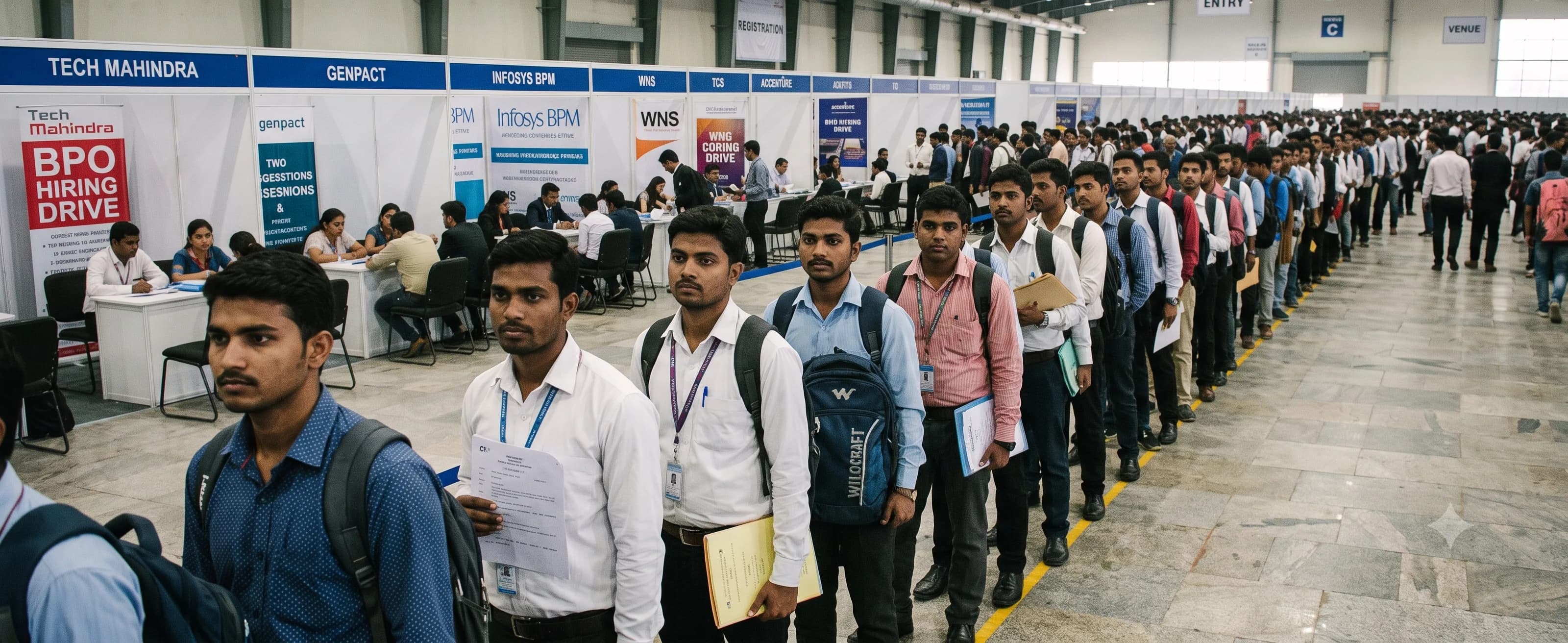
Three things that break at this volume
None of these break on a five-seat req. All three break on this one, and each has a point where it gives way.
by application 400
Reading stops being reading
The first eighty get read. The next eighty get skimmed. After that the shortlist is whatever was on top of the pile at 7pm. Nobody decides to stop reading, it just stops, and Monday's batch gets filled out of the leftovers.
by day three
The ones worth calling go cold
Someone worth a call on Monday has three other calls by Wednesday. At this volume the gap between shortlisted and contacted is hours, not days. You already know who to ring. That list is sitting behind 900 profiles nobody has opened, and every day lost here lands on a 60-day notice you are already counting backwards from.
by the third source
One person becomes three candidates
The extension pulls a profile off Naukri. The same person applies again through the drive link. Then they land a third time on the CSV from Saturday's walk-in desk. Three cards, three recruiters ringing the same number, two different verdicts, and the client sees the same person twice.
Four phases, each with a window it has to finish inside, because the joining date does not move for anybody.
day 0
Set the req up so the scoring means something
day 1-3
Fill the top
day 2-7
Reach them before they go cold
day 4-14
Interview at the volume, not below it

The parts you are right to worry about
Half our volume arrives two or three times, extension plus drive link plus walk-in CSV. Where does that cost us twice?
Not in the work. They collapse into one ranked card, so your team rings once and the client sees one verdict. What you pay is the rate on each pull: resume screening 0.5, board import 0.5, LinkedIn import 1, sourcing 1 and refunded if the person is not found or comes back below the quality threshold. Email is 1 credit per candidate ever, not per message, and moving that same candidate onto another of your own reqs is free, with a fresh score against that JD.
Can it write 4,000 emails that do not read like 4,000 emails?
No. Know this before you buy. Email here is a blast tool: bulk send, merge fields, a deliverability pool, bounce monitoring. There is no AI writing a different email per candidate, and no domain warming bundled in. When one person needs a real conversation, that is what WhatsApp sessions and voice calls are for, at 2 credits per connected minute.
The client sent a two-line JD and wants 200 people by the 15th. What do the scores mean then?
Less than you want, and RecruitKar says so rather than hiding it. A thin JD, or a CSV row with only a name and an email, comes back with those dimensions empty instead of inflated. That is a real limit: vague JD in, vague verdicts out. The fix is ten minutes on the JD, not a better model, and you are told which parts are missing.
Most of our applicants will not interview comfortably in English, and we have no panel time for 500 of them.
AI interviews run in 12 languages, voice or video, without booking a panel slot, each one recorded with proctoring events, a scorecard and a hiring recommendation. It is a recommendation. You still set the bar and you still decide who joins the batch. Billing is 4 credits a minute capped at 60, so one long interview cannot quietly run away with the budget.